visarunway.app
Visarunway
Fast-growing visa agency scaling with technology
0→2K
monthly applications in year one
60%
reduction in support inquiries
48h
from kickoff to first live application
Clients don't see your workflow — they see your communication. Here's how to make it clear, proactive, and consistent, while automating the routine without sounding like a robot.
Your client never sees your workflow, your document validation, or your processing efficiency. What they actually experience is your communication — the messages they receive, how clear they are, how promptly they arrive. To the client, communication isn't a support function; it largely is the service.
This reframing matters. Two agencies can have identical processing quality, but the one that communicates clearly and proactively will be perceived as far better — and will earn the referrals and repeat business. Visa applicants are often anxious, dealing with something important and unfamiliar, and good communication is what turns that anxiety into confidence.
Getting communication right isn't soft or secondary. It's one of the highest-leverage things a visa consultant can master.
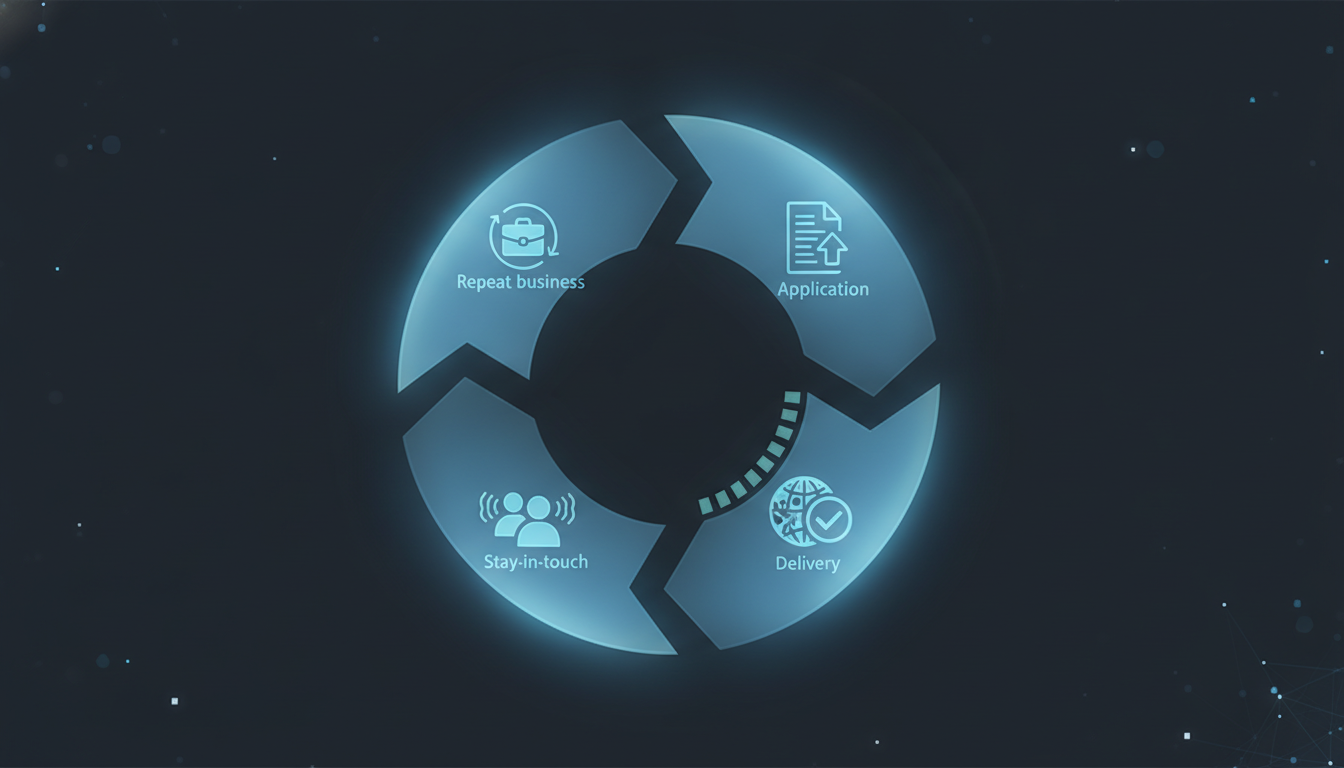
The single biggest shift is from reactive to proactive communication. A reactive agency answers "what's my status?" when asked. A proactive agency makes sure the client never needs to ask, because they're already informed at every step.
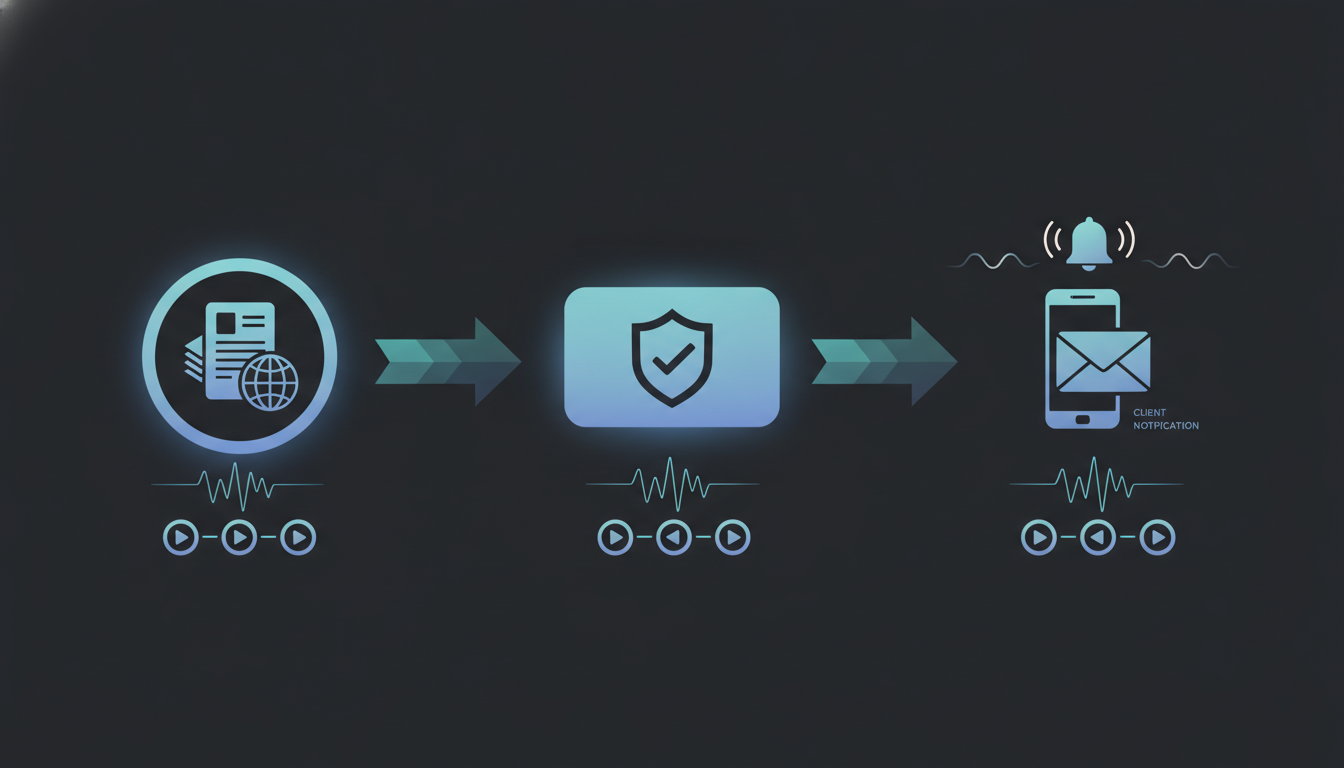
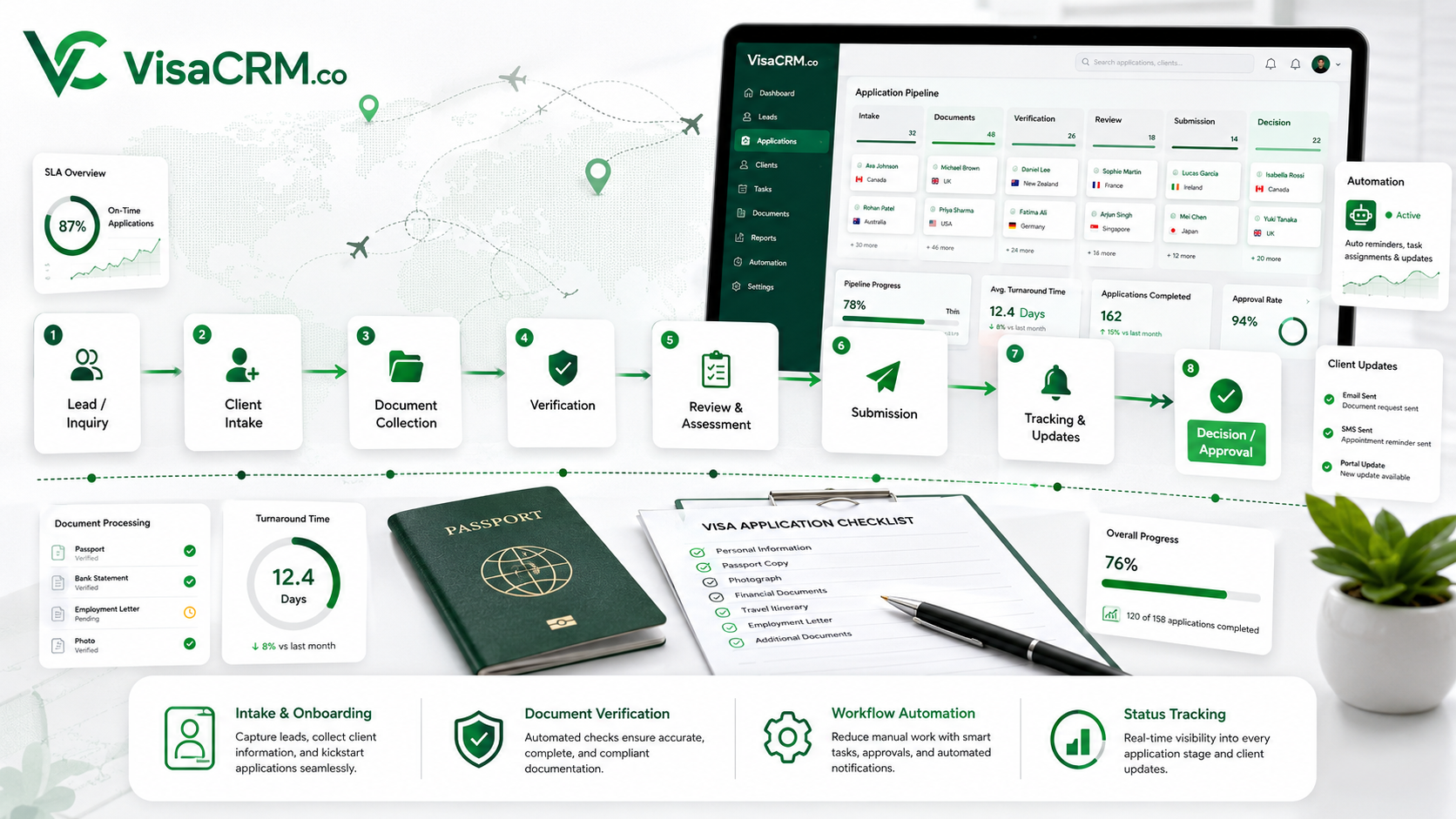
Proactive communication means notifying clients of progress as it happens — application received, documents reviewed, submitted, decision — and reassuring them during quiet periods ("your application is with the embassy; typical time is X days"). It pre-empts worry instead of responding to it.
The payoff is double: clients feel cared for, and your team handles far fewer inbound enquiries. Visarunway cut support enquiries by 60% precisely by being proactive — the same communication that reassured clients also protected the team's time.
Book a quick demo and see how it works for your visa types.
Good communication isn't about sending more messages — it's about sending clear, consistent ones. Each message should be easy to understand, free of jargon, and explicit about what (if anything) the client needs to do.
Consistency matters just as much. Every client should receive the same high standard of communication, regardless of which team member handles their case or how busy you are. This is hard to achieve manually — quality drifts under pressure, and messages get forgotten during peaks.
The solution is to standardise: well-crafted message templates for each touchpoint, so that clarity and tone are built in. Templates ensure the quietest day and the busiest day deliver the same clear experience.

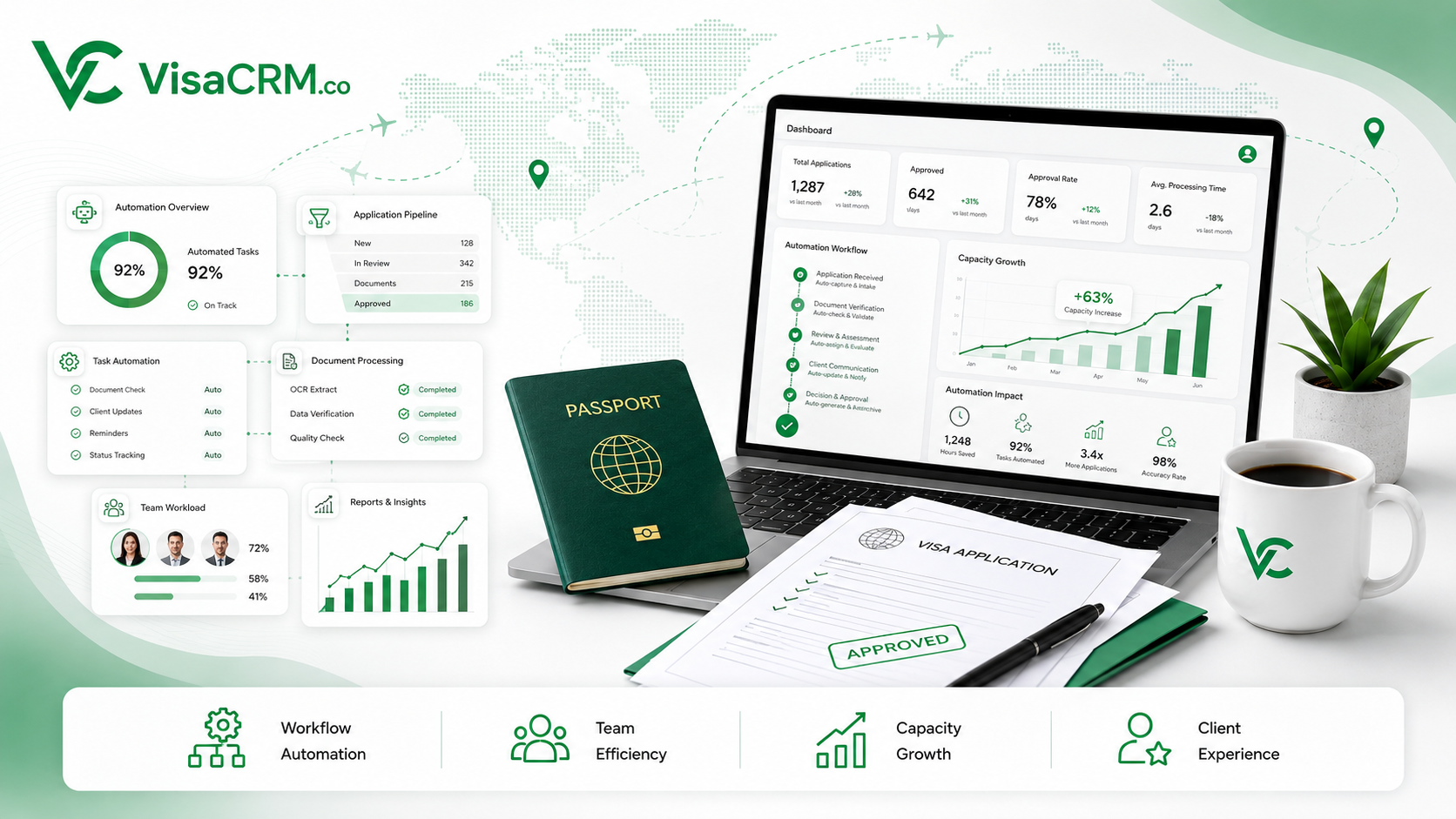
The art of communication at scale is knowing what to automate and what to keep human. The routine, high-volume messages — status updates, document requests, payment confirmations, reminders — should be automated. They're predictable, they need to be consistent, and automating them frees your team's time.
That freed time goes to the communication that genuinely benefits from a human: complex questions, reassurance in difficult cases, the judgement calls. Automation handles the volume so that people can handle the moments that matter.
This isn't automation replacing the human touch — it's automation creating room for it. An agency drowning in routine messages has no time to be thoughtful; an agency that automates the routine can be genuinely present for the conversations that build relationships and retention.
Book a discovery call and see how VisaCRM can automate your workflow.
Book a call →Finally, communicate on the channels your clients actually use. For most visa applicants — often international, mobile-first, and spread across time zones — that means WhatsApp and email, frequently both.
Meeting clients on their preferred channel dramatically improves whether your communication is actually seen and acted on. A perfectly written status update sitting unread in an email promotions folder helps no one; the same message on WhatsApp is read within minutes.
Clear, proactive, consistent, on the right channel, automated where routine and human where it counts — that's the formula. Master it, and communication stops being a cost centre and becomes the reason clients choose you and stay. Want to put your client communication on this footing? Book a demo.
Because clients never see your workflow — they experience your communication. To the client, communication largely is the service. Two agencies with identical processing quality will be perceived very differently if one communicates clearly and proactively. Visa applicants are often anxious, and good communication turns that anxiety into confidence, earning referrals and repeat business.
Proactive communication informs clients of progress as it happens and reassures them during quiet periods — "your application is with the embassy; typical time is X days" — so they never need to ask. It pre-empts worry instead of responding to it. One agency cut support enquiries by 60% by being proactive.
Standardize with well-crafted message templates for each workflow touchpoint, so clarity and tone are built in regardless of which team member handles a case or how busy you are. Automate the routine, high-volume messages — status updates, document requests, confirmations — so the busiest day delivers the same clear experience as the quietest.
Use the channels clients actually use — for most visa applicants, who are international and mobile-first, that's WhatsApp and email, often both. Meeting clients on their preferred channel dramatically improves whether messages are seen and acted on; a status update read within minutes on WhatsApp beats one unread in an email promotions folder.
Bu yazıdaki örüntüler şu platformlarda çoktan yayında. Farklı markalar, farklı vize tipleri — altında tek bir motor.
Modern bir vize işletmesini yürütmenin derinine inen pratik rehberler.