anyvisa.app
Anyvisa
UK's leading online visa platform
300%
increase in application capacity
75%
reduction in support tickets
4.8/5
customer satisfaction score
A commission program turns partners into an active sales force. But the structure and the tracking make or break it. Here's how to design one that scales.
A partner network without a clear incentive is just a contact list. A commission program turns that list into an active sales force, because it aligns your partners' interests with your growth — every application they send earns them money.
The structure of that commission shapes behaviour. Get it right and partners prioritise sending you business; get it wrong and they drift to a competitor with a better deal or simply stop bothering. So the commission model isn't an afterthought — it's the engine of the whole network.
This guide covers the models, the tiers, and — most importantly — the systems that make commission programs manageable rather than an accounting nightmare.
There are a few standard structures, and the right one depends on your margins and partner type:
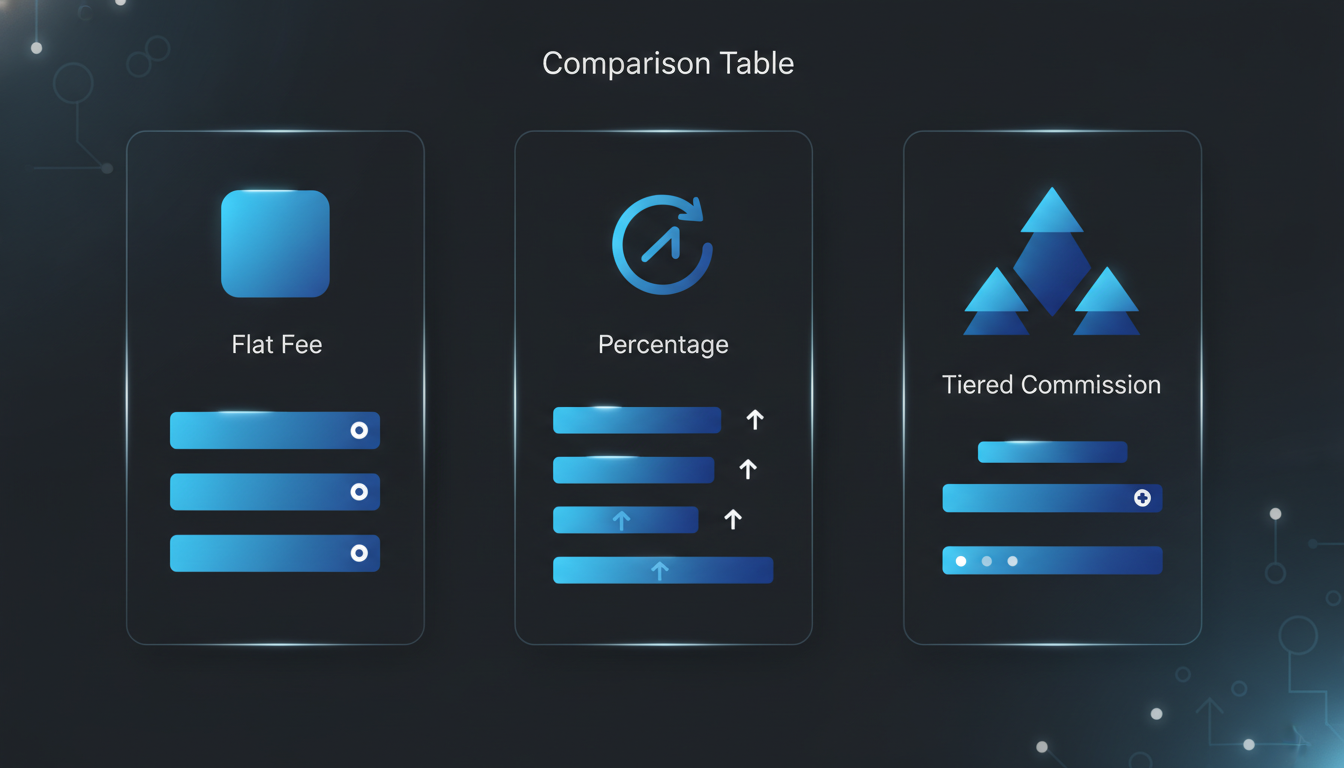
Flat fee per application — Simple and predictable. The partner earns a fixed amount per submitted (or approved) application. Easy to understand, easy to trust.
Percentage of service fee — The partner earns a share of your service fee. This scales with the value of the visa type, rewarding partners who send higher-value work.
Tiered commission — Rates increase as a partner sends more volume, incentivising partners to consolidate their business with you rather than spreading it around.
Many agencies blend these — a percentage base with volume tiers. The crucial decision is whether commission is earned on submission or on approval; tying it to approval protects your margins but can frustrate partners on refusals outside their control.
Book a quick demo and see how it works for your visa types.
Nothing kills a partner program faster than opacity. If partners can't see what they've earned, when they'll be paid, and how the figure was calculated, trust erodes — and trust is what keeps them sending business.
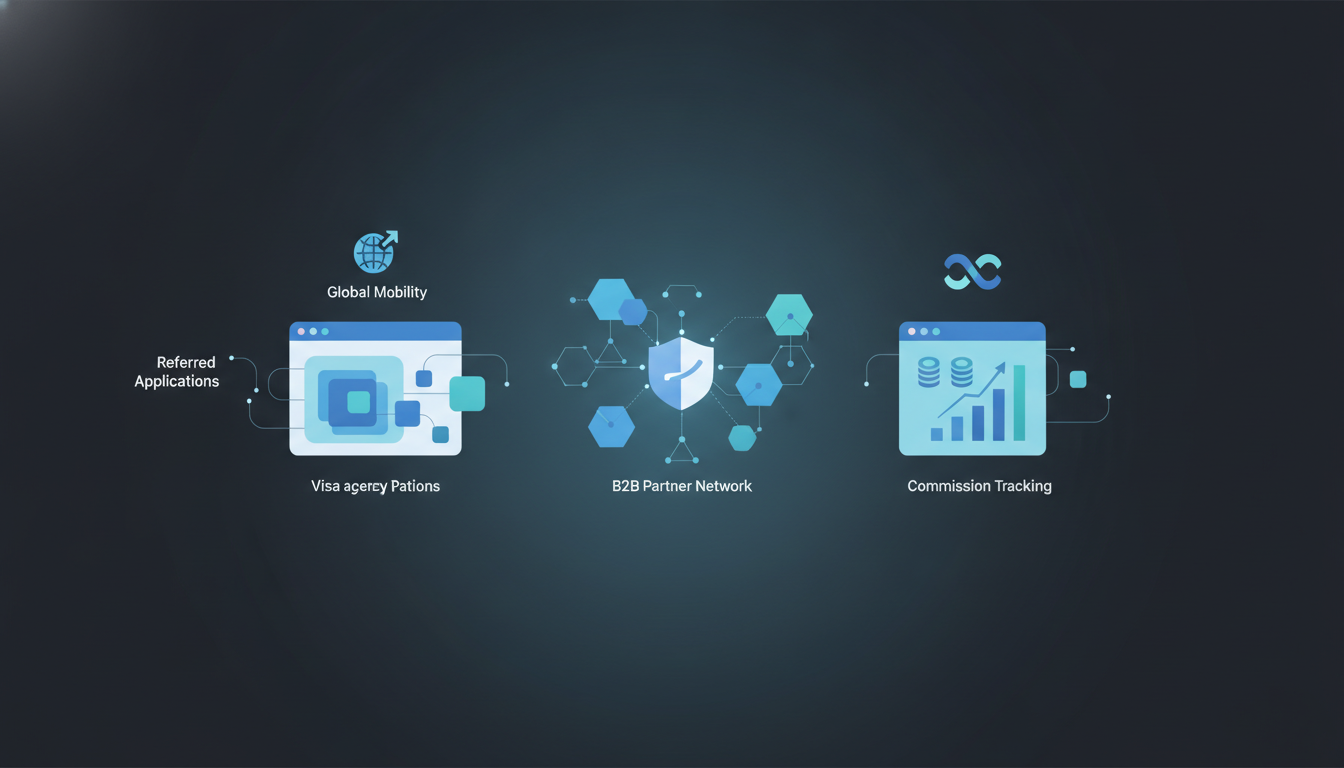
The fix is giving partners real-time visibility into their own commission: applications referred, their status, commission accrued, and payment history. When a partner can log in and see exactly where they stand, you eliminate the disputes and chase-up emails that otherwise consume your time.
This transparency is only practical with a system that tracks commissions automatically as applications flow through. Calculating partner commissions by hand across a spreadsheet is precisely the kind of manual work that breaks down as the network grows.
The operational heart of a commission program is accurate, automatic tracking. Each application needs to be attributed to the right partner, the commission calculated according to that partner's terms, and the total reconciled for payout.
Done manually, this is error-prone and doesn't scale — and errors here are especially damaging, because they directly affect what you owe a partner. A purpose-built platform that attributes applications to partners and computes commissions automatically removes both the labour and the risk.
Automated tracking also gives you the data to manage the program: which partners drive volume, which commission structures perform best, and where your partner-acquisition cost actually pays off.
Book a discovery call and see how VisaCRM can automate your workflow.
Book a call →A commission program touches money and, often, regulation. Two principles keep it healthy.
First, fairness: clear terms, consistent application, and prompt payment. Partners talk to each other; a reputation for paying reliably and transparently attracts more and better partners over time.
Second, compliance: in some jurisdictions, paying for referrals of regulated immigration services has legal constraints. Understand the rules in the markets you operate in, and structure your program accordingly — this connects to broader compliance obligations for visa agencies.
A well-run commission program is one of the most scalable growth levers available to a visa agency. Want commission tracking and partner payouts handled automatically? Book a demo.
Partners earn a commission for each application they refer or submit, which turns a partner list into an active sales force by aligning their interests with your growth. The structure — flat fee, percentage of service fee, or tiered by volume — shapes how much business partners send you, so it's the engine of the whole network.
It depends on your margins and partners. A flat fee per application is simple and predictable; a percentage of service fee scales with visa value; tiered commission rewards higher volume. Many agencies blend a percentage base with volume tiers. A key choice is whether commission is earned on submission or on approval.
Give partners real-time visibility into applications referred, status, commission accrued, and payment history, so there are no disputes. Apply clear terms consistently and pay promptly — partners talk to each other, and a reputation for reliable, transparent payment attracts more and better partners over time.
It depends on the jurisdiction. In some markets, paying for referrals of regulated immigration services has legal constraints. Understand the rules in the markets you operate in and structure your program accordingly — this connects to broader compliance obligations visa agencies face.
Bu yazıdaki örüntüler şu platformlarda çoktan yayında. Farklı markalar, farklı vize tipleri — altında tek bir motor.
Modern bir vize işletmesini yürütmenin derinine inen pratik rehberler.