anyvisa.app
Anyvisa
UK's leading online visa platform
300%
increase in application capacity
75%
reduction in support tickets
4.8/5
customer satisfaction score
Manual processing feels free because the costs are hidden — buried in staff hours, lost applications, and refused visas. Here's how to put a real number on it.
The most expensive thing about manual visa processing is that it doesn't show up on any invoice. There's no monthly subscription line, so it feels free. But the cost is real — it's just hidden inside staff hours, lost revenue, and damaged reputation.
Every manual status email, every chased document, every payment reconciled by hand, every spreadsheet report assembled at month-end is time your team spends not growing the business. At a handful of applications a week it's invisible. At a few hundred a month, it's a full-time job's worth of work nobody decided to hire for.
The agencies that switch to automation early aren't paying for software they don't need. They're stopping a leak they couldn't see.
Start with the most measurable cost: the hours. A typical manual application involves 15-20 separate touchpoints — data entry, status emails, document follow-ups, payment reconciliation, receipt generation, reporting.
Take just status updates. Each manual status email takes 2-3 minutes to write and send. At 500 applications a month, that's 15-25 hours of pure status-update work — and that's one touchpoint of many. Add document chasing, manual receipts, and reconciliation, and you're easily looking at the equivalent of a full-time role consumed by work that adds no value and could be automated.
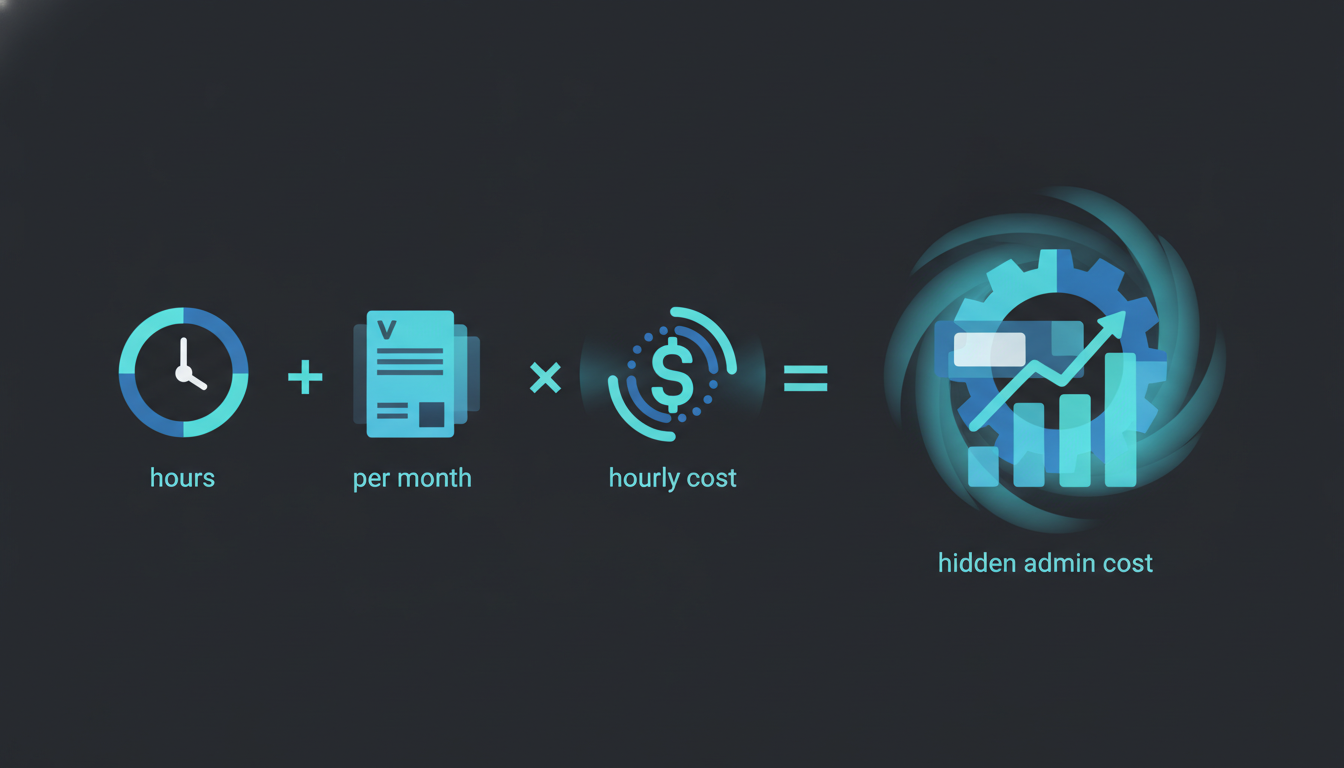
To put a number on it: multiply the hours your team spends on repetitive admin by their hourly cost. Most agencies are startled by the result. Anyvisa recovered most of a full-time agent's capacity simply by automating notifications — a 75% reduction in support tickets that translated directly into hours back.
Book a quick demo and see how it works for your visa types.
Staff time is the visible cost. The more dangerous costs are the ones that hit revenue and reputation.
Document errors that slip through manual review risk a refused visa — which means a refund, a damaged reputation, and often a negative review that deters future clients. In an industry where trust drives the buying decision, a single visible failure is expensive.
Lost or stalled applications are the nightmare scenario of manual tracking. An application that sits in the wrong spreadsheet tab, misses a deadline, or is simply forgotten can mean a missed trip for the client and a refund for you. Manual systems fail silently — you don't know an application slipped until the client calls, angry.
Capacity ceilings cost you growth itself. When manual work caps you at 300-500 applications a month, every enquiry beyond that is revenue you turn away or serve badly. That opportunity cost rarely gets counted, but it's often the largest number of all.
You can estimate your agency's manual-processing cost with a simple framework. Add up four numbers:
1. Admin hours — Estimate hours per month spent on repetitive tasks (status updates, document chasing, reconciliation, reporting) × loaded hourly staff cost. 2. Error cost — Refunds, re-applications, and lost clients from document errors and refusals attributable to manual mistakes. 3. Lost applications — Average revenue per application × applications lost to stalls, missed deadlines, or forgotten cases. 4. Capacity ceiling — Enquiries you turned away or couldn't serve well because manual processes capped your volume × conversion rate × revenue per application.
The total is almost always many times the cost of the software that would eliminate most of it. That's the comparison that matters — not "the CRM costs £X a month," but "manual processing costs me £Y a month, and most of it is avoidable."
Book a discovery call and see how VisaCRM can automate your workflow.
Book a call →The most common objection to switching is "we'll do it later, when we're bigger." But manual costs compound. Every month you wait, you accumulate more hours lost, more errors risked, and more growth foregone — and you build up more manual habits and scattered data that you'll eventually have to unwind anyway.
There's rarely a perfect "right time" to switch. There is, however, a clear "too late" — the point where manual processes are actively preventing growth and the unwinding has become a project in itself. The agencies that move early avoid accumulating that debt entirely.
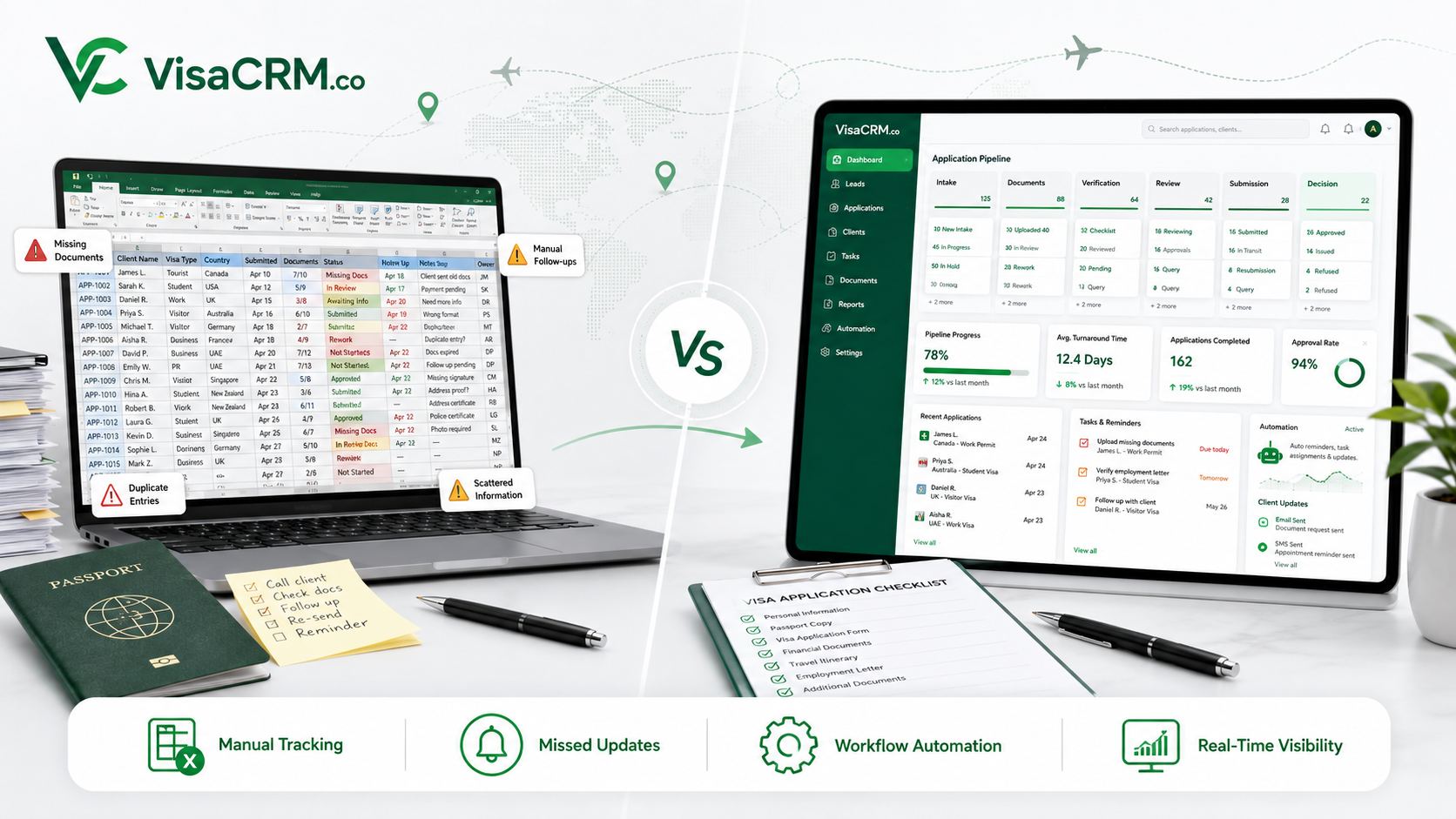
If you want to understand exactly what changes when you move off manual tools, read Spreadsheets vs Visa CRM: When to Make the Switch.
Want help putting a real number on your manual-processing cost? Book a call and we'll work through it with you.
More than it appears. Manual processing has no invoice line, so it feels free, but the cost is hidden in staff hours, lost revenue, and damaged reputation. Add up admin hours times staff cost, error and refusal costs, revenue from lost or stalled applications, and growth foregone from capacity ceilings — the total usually dwarfs the software that would prevent it.
Each manual status email takes 2–3 minutes. At 500 applications a month, status updates alone consume 15–25 hours — and that's just one of many touchpoints. Add document chasing, manual receipts, and reconciliation and you easily reach a full-time role's worth of work that could be automated.
Beyond staff time: document errors that slip through manual review and cause refusals, refunds, and bad reviews; lost or stalled applications that miss deadlines because manual systems fail silently; and capacity ceilings that cap you at 300–500 applications a month, turning away growth. The opportunity cost of foregone growth is often the largest figure.
Add four numbers: admin hours per month times loaded hourly staff cost; the cost of refunds and lost clients from document errors; average revenue per application times applications lost to stalls or missed deadlines; and enquiries turned away due to capacity, times conversion rate and revenue per application. The total is usually many times the cost of automation.
Bu yazıdaki örüntüler şu platformlarda çoktan yayında. Farklı markalar, farklı vize tipleri — altında tek bir motor.
Modern bir vize işletmesini yürütmenin derinine inen pratik rehberler.