
olavisa.app
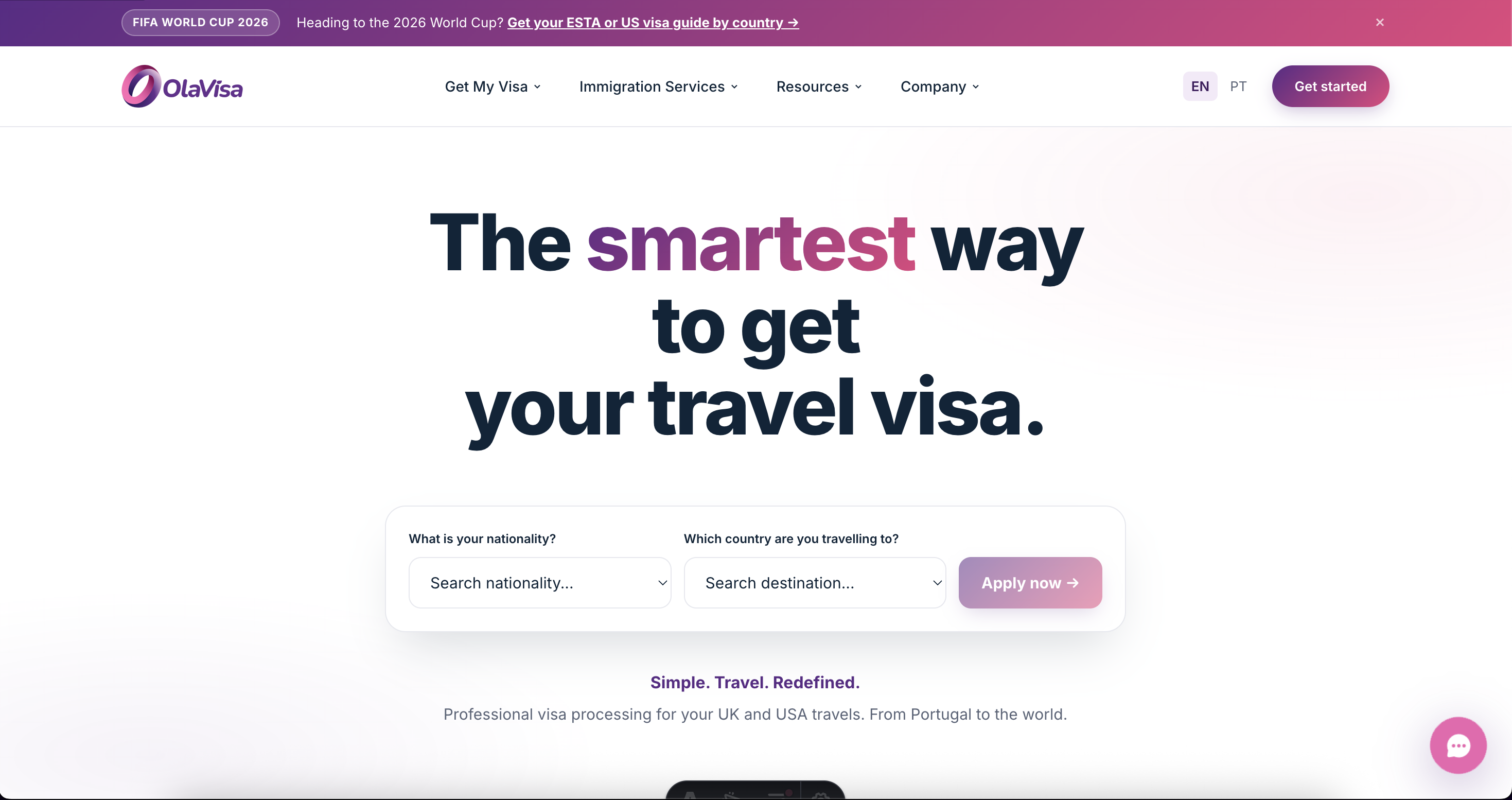
OlaVisa
Portugal-based visa specialist for UK & USA travel
EN/PT
fully bilingual platform
UK + US
primary destination focus
FIFA 26
live seasonal ESTA campaign
 Peter Miranda · Owner
Your clients need visas whether or not you sell them. Right now that means unpaid phone support and a referral to someone else. VisaCRM turns visas into an attached revenue line — white-label checkout, partner portal, and commissions calculated and invoiced automatically.

We answer visa questions all day and earn nothing from any of them.
Put a real visa checkout on your own site. The client applies where they booked the trip, pays a service fee on top of the government fee, and the enquiry becomes an attached sale instead of unpaid support.
We refer clients to a visa processor and have no idea whether we were ever paid for it.
A branded partner portal shows every referred application, its live status, and the commission earned. Commission is calculated automatically per application, and invoices are generated rather than argued over.
Our sub-agents each keep their own commission spreadsheet, and none of them match ours.
One ledger. Each partner sees their own applications and their own earnings in their own portal, calculated from the same rules. There is no second spreadsheet to reconcile against.
Sending a client to a third-party visa site mid-booking is where we lose them.
The platform is white-labelled on your domain and brand. The client applies inside your experience, so the trip and the visa stay one purchase from one company.
A refused visa becomes our problem, our refund conversation, and our review.
Requirement-driven document collection and upload-time validation catch the errors that cause avoidable refusals, and automated status updates keep the client informed rather than anxious.
Every travel agency and tour operator already deals in visas. A client books Bali and asks whether they need a visa on arrival. A group tour to Turkey generates fourteen separate questions about e-Visas. Somebody on the team spends an hour a day on it, and none of it is invoiced.
Then the client goes and buys the visa somewhere else. The agency carried the support cost and a different business booked the revenue. Worse, if that visa goes wrong, the client blames the agency — because the agency sold the trip.
So the visa line already exists in your business. It is just sitting in the cost column. The only question is whether you turn it into margin. Travel agencies as a visa sales channel makes the economic case in more detail.
There are two workable ways for a travel business to monetise visas, and they suit different agencies.
Sell them yourself. You put a visa checkout on your own site, charge a service fee on top of the government fee, and process the applications. The margin is highest here and you own the client relationship end to end. The trade-off is that you now run visa operations — document requirements, consulate rules, and the odd refusal — which is real work.
Earn commission as a partner. You refer applications to a visa agency that processes them, and you take a commission per application through their partner portal. Lower margin, near-zero operational load, and it starts producing next week rather than next quarter. How commission-based partner programs work covers the usual structures.
Most agencies start on commission to prove the volume is real, then move to selling directly once they can see how much of it there was. Both models run on the same platform.
Book a discovery call and we'll walk through your workflow together.
Commission arrangements between travel businesses and visa processors are usually killed by the same thing, and it is not the commission rate. It is that nobody can agree on what was earned.
The processor tracks referrals in a spreadsheet. The agency tracks them in a different spreadsheet. At month end, the numbers do not match, someone has to go through it application by application, and by the third month everyone is tired of it. The partnership does not fail — it gets quietly abandoned.
VisaCRM's B2B partner portal removes the argument by removing the second spreadsheet. Each partner gets a branded portal and API access showing their own applications, live status, and earned commission. Commission is calculated automatically per application against the agreed rules, and invoicing is generated from the same ledger. There is one number and both parties are looking at it.
If you are the one recruiting sub-agents rather than joining someone else's network, building a B2B partner network covers the recruiting and rate side of it.
There is a specific moment where travel agencies lose visa revenue: the redirect. The client is on your site, mid-booking, ready to buy, and you send them to a visa site with a different logo and a different checkout. A chunk of them do not come back, and the ones who do have now met a company that could sell them a trip.
A white-labelled platform closes that gap. The application flow runs on your domain, in your brand, with your prices. The client applies for their Schengen visa without ever registering that a different company processed it. To them, they bought a trip and a visa from you, which is exactly what happened.
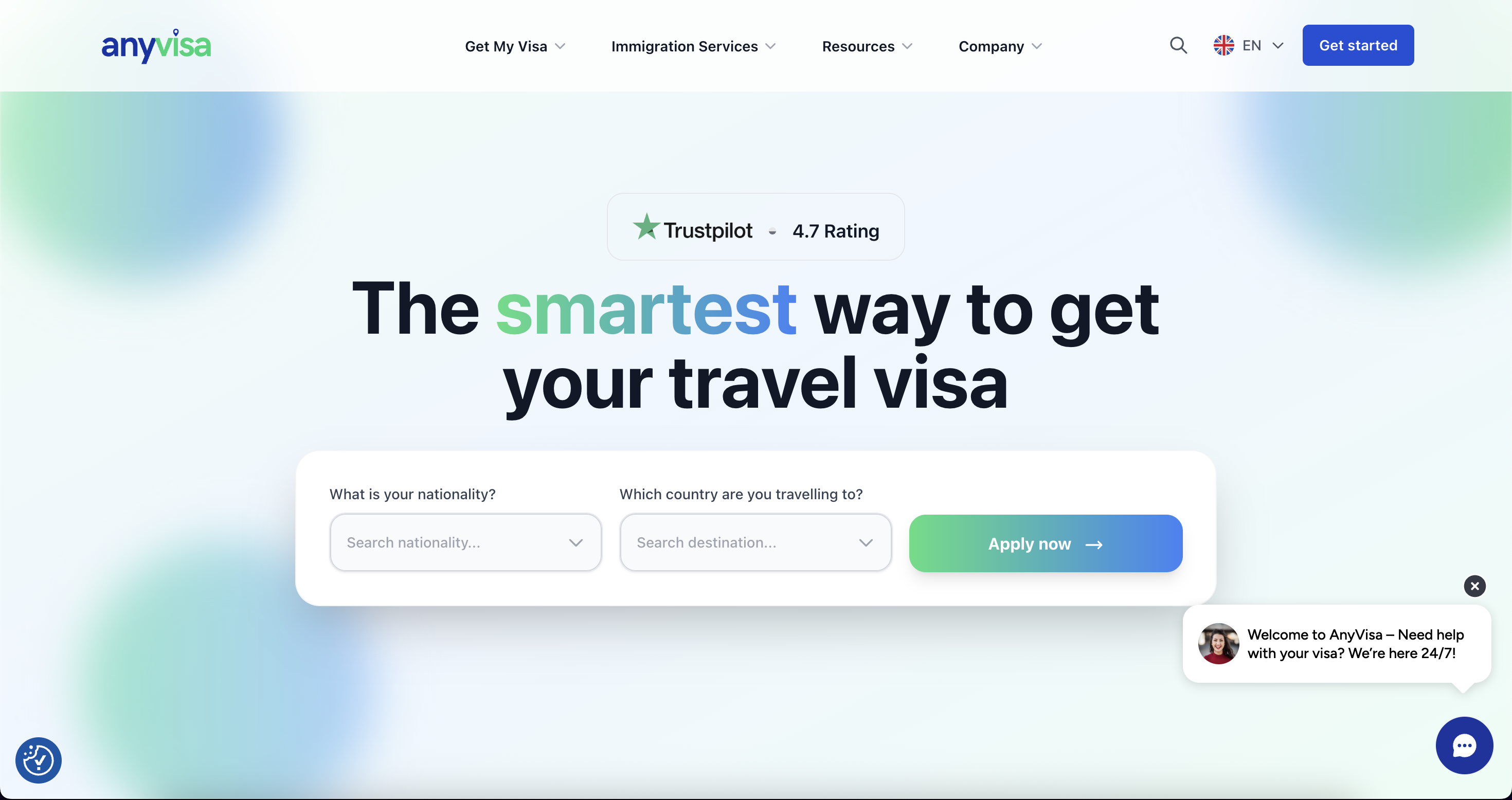
The landing builder lets you publish destination and visa-type pages under the same brand, so the visa search traffic you are currently sending to competitors lands on you instead. OlaVisa runs this pattern hard — a bilingual EN/PT flow with ESTA support and seasonal campaigns like their FIFA 2026 push, all on one branded backbone.
Travel demand is not flat, and neither is visa work. Summer, school holidays, Golden Week, Hajj, a World Cup — the volume arrives in walls. Your flight and hotel operations are built for that. Your visa handling, if it is a person and an inbox, is not.
This is why visas fail as a side line in travel businesses. They work fine in February and collapse in July, exactly when the trips are worth the most and exactly when a delayed visa becomes a cancelled holiday.
An automated flow does not care about the shape of the curve. Document requirements are generated per visa type, uploads validate themselves, status updates fire automatically, and cases are prioritised by departure date rather than by arrival order — which for a travel business is the only sane ordering. Peak season management for visa agencies covers the operational prep, and e-commerce and checkout covers how multi-currency pricing and gateways are configured.
Tell us what you need and we'll come back with a plan. Nothing to pay until it's delivered.
Get started →The Starter Pack — $99/month plus a one-time setup fee, typically live within days — is enough to test whether your existing client base actually converts on visas. Branded landing site, customer portal, admin portal, applicant and case management, Stripe and PayPal, email notifications, basic analytics.
The B2B partner portal and API, WhatsApp and SMS, unlimited visa types, and custom integrations sit in the bespoke tier, quoted per agency and typically live in about six weeks. If your model depends on sub-agents and commission, that is the tier you want, because the partner portal is the whole mechanism.
If you want to know whether the volume is there before you commit, look at how many visa questions your team answered last month for free. That number is your visa line, and right now you are paying for it instead of earning it.
A travel agency refers visa applications to a processing agency and earns an agreed commission per application, usually through a B2B partner portal that tracks referrals and calculates earnings automatically. The alternative is selling visas directly and charging a service fee on top of the government fee, which pays more but means running visa operations yourself.
Yes. A white-labelled visa platform runs on your own domain with your branding, prices, and checkout, so clients apply without leaving your experience. With VisaCRM the platform is built, branded, and operated for you, and the processing partner is invisible to the traveller. This matters most mid-booking, where a redirect to a third-party site loses sales.
It depends on the model. Earning commission as a referral partner needs almost none — the processing agency handles requirements, submission, and outcomes. Selling visas directly does need real knowledge of document requirements and consulate rules, though requirement-driven forms and upload validation remove most clerical error. Many travel agencies start on commission and move to direct sales once volume is proven.
In VisaCRM, commission is calculated automatically per application against the rules agreed with each partner, and both sides see the same ledger. Each partner logs into a branded portal showing their referred applications, live status, and earnings, with invoices generated from the same data. This removes the reconciliation spreadsheet that ends most commission arrangements.
Options range from spreadsheets and email, through generic CRMs, to purpose-built visa platforms with a checkout, per-visa-type document requirements, and a partner portal. Travel agencies specifically need multi-currency payments, white-labelling, and commission tracking, because their visa revenue usually flows through partners and their clients buy in different currencies.
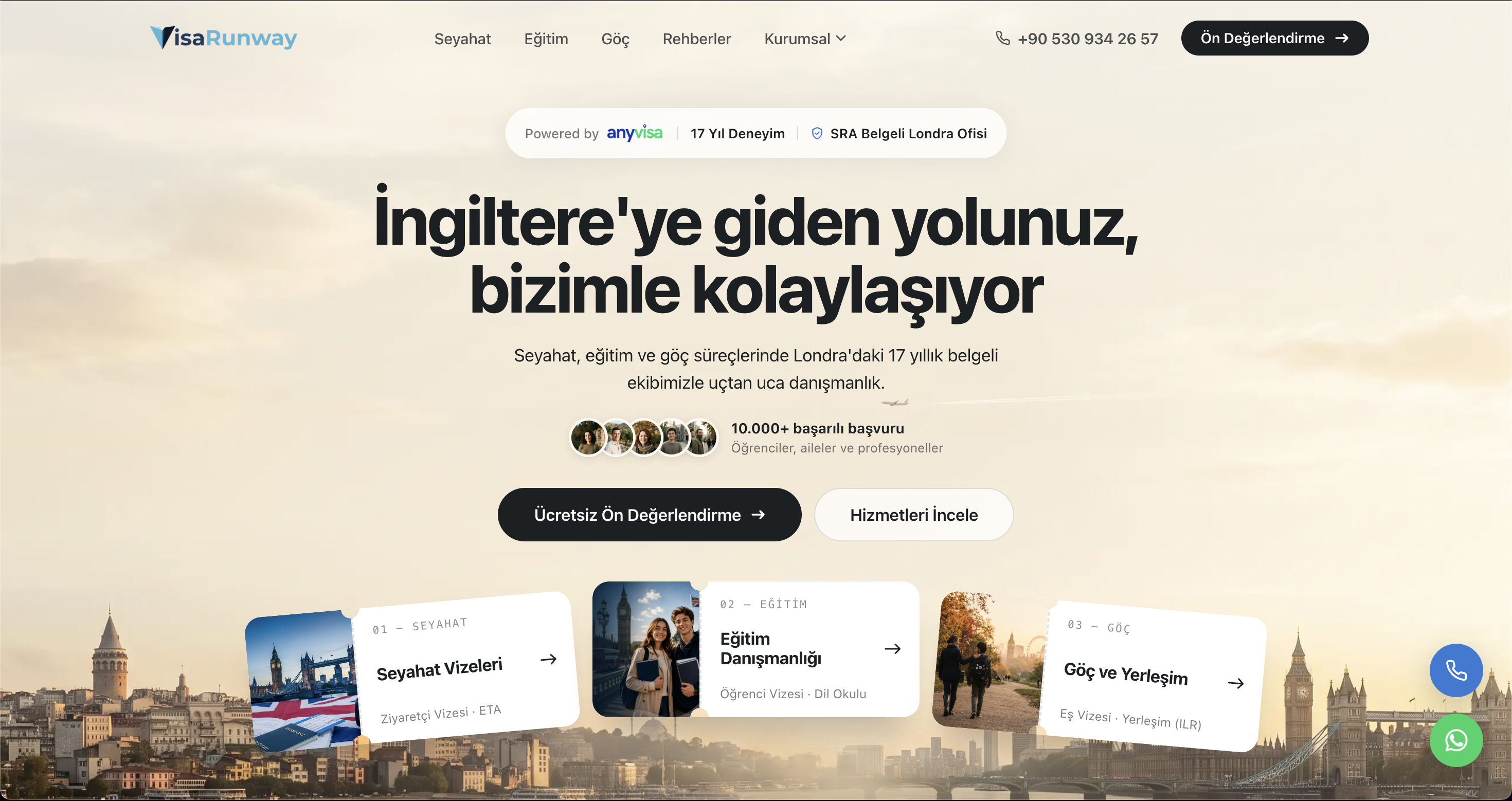
The patterns in this article are already deployed across these platforms. Different brands, different visa types — one engine underneath.
Practical guides that go deeper on running a modern visa business.
Book a discovery call and we'll walk you through the platform with your visa types, payment flow, and the things your current tools leak.
Book a discovery call →