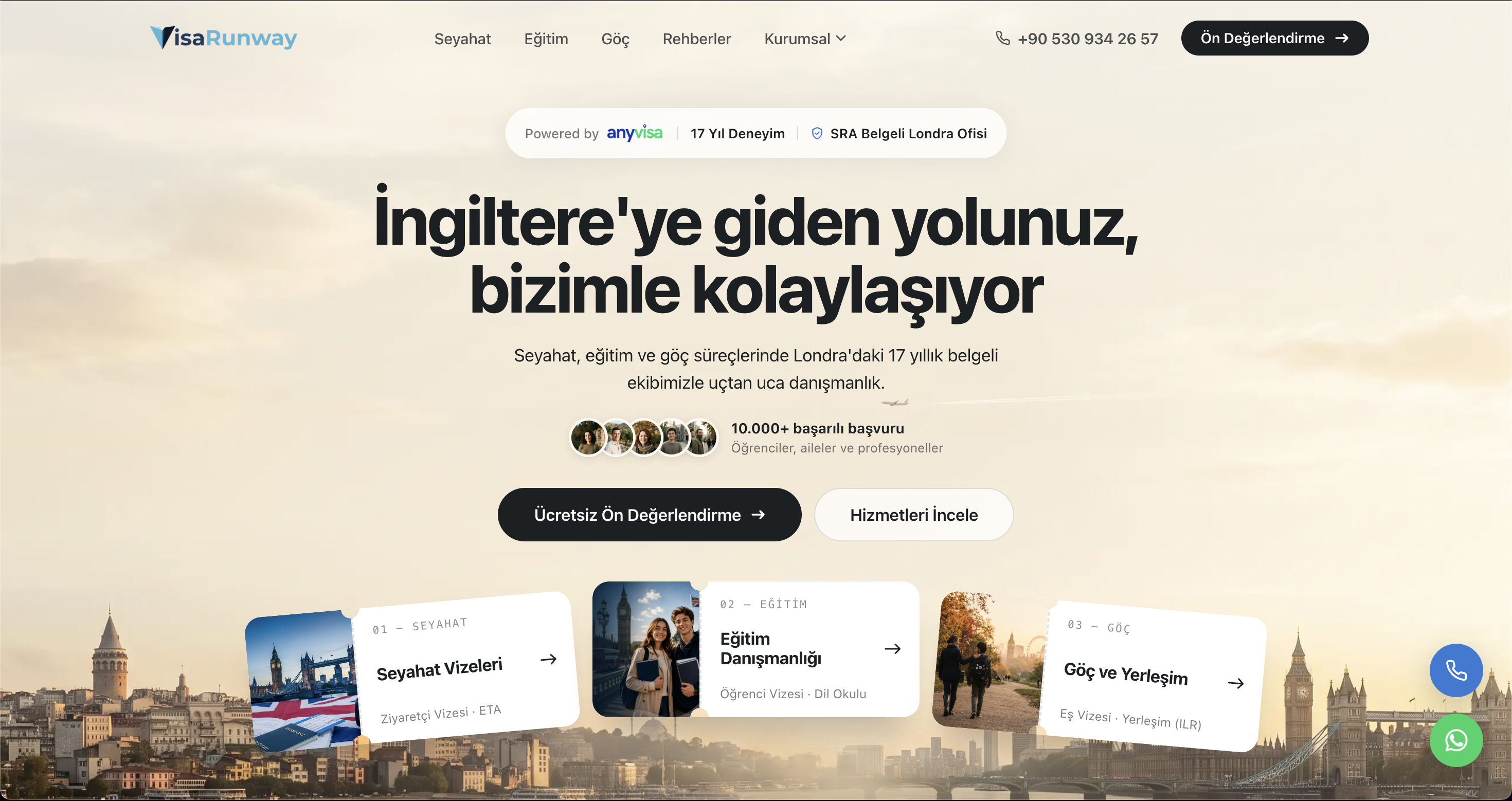

anyvisa.app
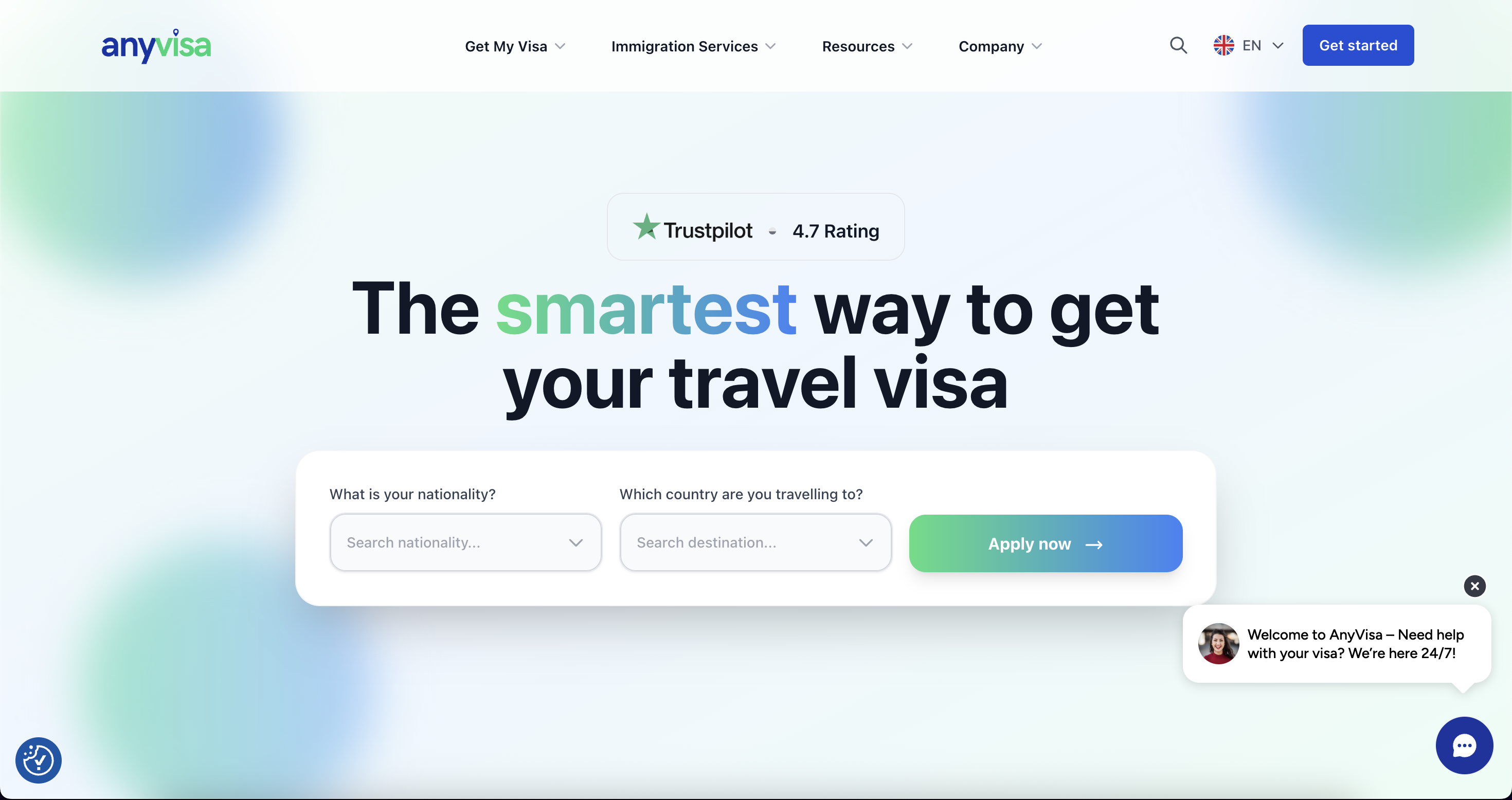
Anyvisa
UK's leading online visa platform
300%
increase in application capacity
75%
reduction in support tickets
4.8/5
customer satisfaction score
 Tomas Hassan · CEO
Independent consultants and immigration consultancies run on spreadsheets, WhatsApp, and memory. VisaCRM replaces all three with one branded platform — dynamic intake per visa type, document deadlines, online payments, and automatic status updates — built, deployed, and operated for you.

My applications live across a spreadsheet, my inbox, and about forty WhatsApp threads.
Every application becomes one case file with the form data, documents, payments, and full message history attached. Email, WhatsApp, SMS, and in-app chat merge into a single timeline, so there is nothing to reconstruct from memory.
I spend half my week chasing the same four documents from people who already paid me.
The applicant sees exactly which documents their visa type requires, uploads them through a signed time-limited link, and gets automatic reminders as the deadline approaches. Validation catches the wrong file or a missing page at upload time.
I still send payment links by hand and reconcile against my bank statement at month end.
Applicants pay at checkout through Stripe, PayPal, Barclays ePDQ, or Ryft in GBP, USD, EUR, TRY, or AED. Invoices are issued automatically and payments reconcile against the case, including partial refunds.
Clients message me at 11pm asking where their application is, and I have to go look.
17+ automated notification types fire on status changes, so the client hears about it before they think to ask. When they do want to check, they log into your own client portal instead of messaging you.
I look like a one-person operation next to the big agencies, because I am one.
The platform ships on your domain, under your brand, with your landing pages and your checkout. Clients see an established agency with a real application flow, not a WhatsApp number and a bank transfer request.
The first thing to break is never the visa knowledge. It is the admin around it. At five applications a week you can hold every case in your head. At fifty a week you cannot, and the spreadsheet that got you here starts costing you money — a missed document deadline, a family case where one applicant's passport expired, a payment you never chased because it was on a different tab.
The honest diagnosis is that the work scales linearly with headcount because every application carries the same fifteen to twenty manual touchpoints. Data gets typed twice. Documents arrive by email and get renamed by hand. Status updates get written one at a time. None of it is skilled work, and all of it is on you.
The fix is not a bigger spreadsheet or a tidier folder structure. It is moving the case file into a system that knows what a visa application is. We wrote about the exact point where that switch pays for itself in spreadsheets versus a visa CRM — the short version is that it is earlier than most consultants think.
In VisaCRM, an application is a single object. It holds the intake form answers for that specific visa type, every uploaded document with its deadline, the invoice and the payments against it, the assigned agent, the travel date, and every message ever exchanged with the applicant.
Status is tracked on two axes at once, because consultants genuinely need both. The workflow stage (pending, submitted, processing, approved, refused) tells you where the application is with the consulate. The sales pipeline (lead, contacted, quoted, converted, lost) tells you where the money is. Most generic tools force you to pick one and fake the other.
Cases are prioritised by travel date rather than by whoever shouted loudest this morning, and family applications are handled as one case with per-applicant document tracking underneath. Applicant management covers how the lifecycle, assignment, and handover notes work in practice.
Book a discovery call and we'll walk through your workflow together.
Most independent consultants quote by message, send a payment link by hand, then find out three days later whether it was paid. That gap is where deals go cold and where margin quietly leaks — the express add-on nobody billed, the second applicant who was never invoiced, the refund processed manually and forgotten.
VisaCRM puts a real checkout in front of the application. The price is calculated from the visa type, the applicant's nationality, the destination, and the applicant count, then collected through Stripe, PayPal, Barclays ePDQ, or Ryft in your currency. The invoice is issued automatically. Partial refunds, coupons, and add-ons all post back against the same case.
This matters more than it sounds. Once the checkout is part of the application flow, a visitor who lands on your site at midnight can become a paid case before you wake up. E-commerce and checkout goes through pricing rules, gateways, and reconciliation in detail.
Document collection is where applications stall, and it is almost never the client's fault. They were sent a list in an email two weeks ago, half the requirements did not apply to them, and nobody told them the bank statement needed to cover three months.
Requirements in VisaCRM are attached to the visa type, so the applicant only ever sees the documents that apply to their case. Uploads go through signed, time-limited URLs rather than email attachments. Validation catches the obvious failures — wrong format, unreadable scan, missing page — before a human reviews it and long before the consulate does. Deadlines are tracked on the case, and reminders go out on their own.
That last part is what actually gives you your week back. Nobody has to remember that the Tuesday applicant still owes an invitation letter. See document management for how requirements, expiry, and access control are configured.
The single most common message any visa consultant receives is a status request. Answered manually, it is pure cost: no margin, no expertise, and it arrives at the worst possible times.
VisaCRM merges email, WhatsApp, SMS, and in-app chat into one client timeline and fires 17+ automated notification types off status changes — payment received, documents approved, application submitted, decision in. The client hears from you first. When they still want to look, they open your client portal instead of your phone. Communication covers the channels and the notification types.
Anyvisa tripled its monthly application capacity without adding headcount by attacking exactly this layer. The capacity was never in the team — it was trapped in the messages.
Tell us what you need and we'll come back with a plan. Nothing to pay until it's delivered.
Get started →VisaCRM is a productized service rather than software you rent and configure yourself. The team builds the platform around your visa types and workflows, brands it, launches it on your domain, and stays on as operators. You own the platform; you do not administer it.
The Starter Pack is $99/month plus a one-time setup and onboarding fee. It includes a branded landing site, customer portal, and admin portal, applicant and case management, Stripe and PayPal, email notifications, and basic analytics. It is typically live within days. A bespoke build is quoted per agency and is typically live in about six weeks, adding unlimited visa types and workflows, the B2B partner portal and API, WhatsApp and SMS, custom integrations, AI triage add-ons, and a dedicated operator.
If you are weighing when to move up, scaling a visa agency without hiring is the better framing than a feature list — the question is how many applications your current process can carry before the next hire becomes unavoidable. Full breakdown on pricing.
Visa consultant software is a case management system built around the visa application lifecycle: intake forms per visa type, document requirements and deadlines, fee collection, submission tracking, and the final decision. It differs from a generic CRM because a visa case is not a sales deal — it has applicants, documents, government fees, and a consulate deadline attached to it.
Not necessarily, but the threshold is lower than most consultants expect. The trigger is not volume alone — it is when you start losing money to admin: a missed document deadline, an uninvoiced applicant, a client who left because nobody replied. VisaCRM's Starter Pack at $99/month plus a one-time setup fee exists for exactly this stage.
You can adapt them, and some consultants do. The cost is that you rebuild the visa lifecycle yourself: applicant records, per-visa-type document requirements, government fee pass-through, family applications, and consulate deadlines. Generic CRMs model deals and contacts, not applications and documents, so the fit stays approximate no matter how much configuration you add.
With VisaCRM's Starter Pack, the platform is typically live within days — a branded landing site, customer portal, admin portal, applicant management, Stripe and PayPal, and email notifications. A bespoke build with unlimited visa types, a partner portal, WhatsApp, and custom integrations typically takes about six weeks. Existing cases are usually run down in the old system rather than migrated mid-flight.
No. The platform is deployed on your own domain under your own brand — your landing pages, your checkout, your client portal, your notification emails. VisaCRM builds and operates it behind the scenes. From the applicant's point of view they are dealing with your agency and only your agency, which is the point of a white-labelled platform.
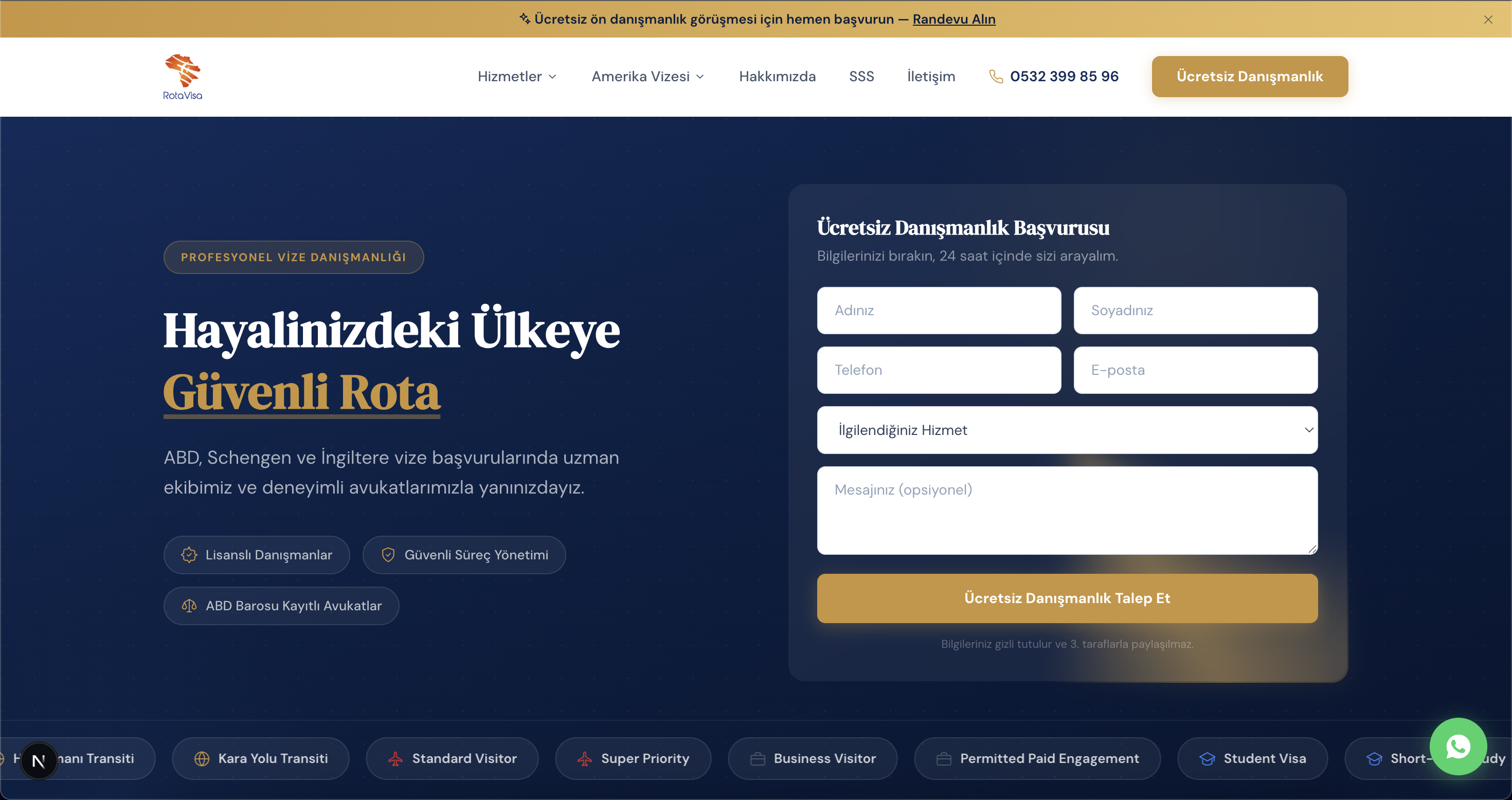
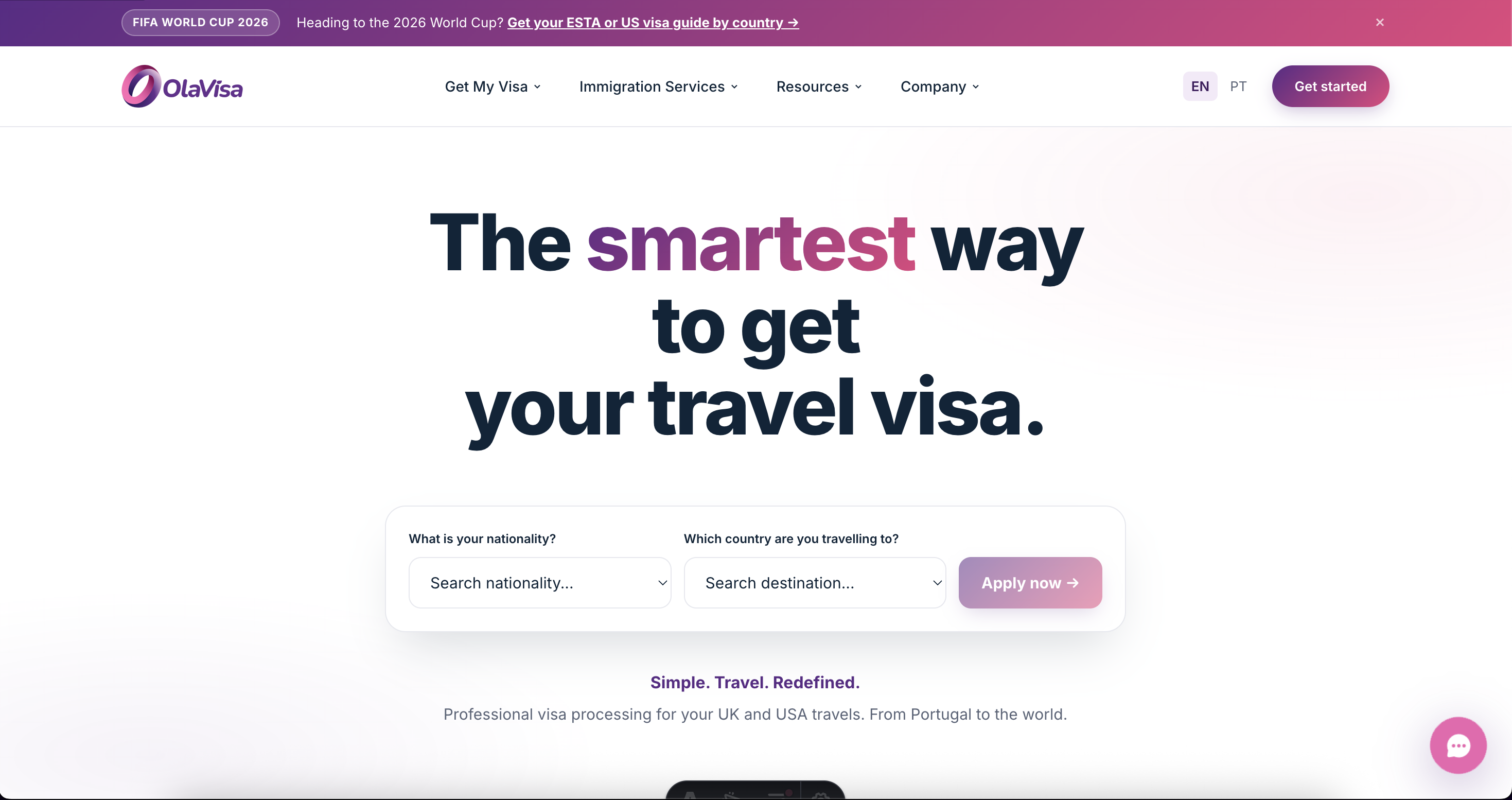
The patterns in this article are already deployed across these platforms. Different brands, different visa types — one engine underneath.
Practical guides that go deeper on running a modern visa business.
Book a discovery call and we'll walk you through the platform with your visa types, payment flow, and the things your current tools leak.
Book a discovery call →