
anyvisa.app
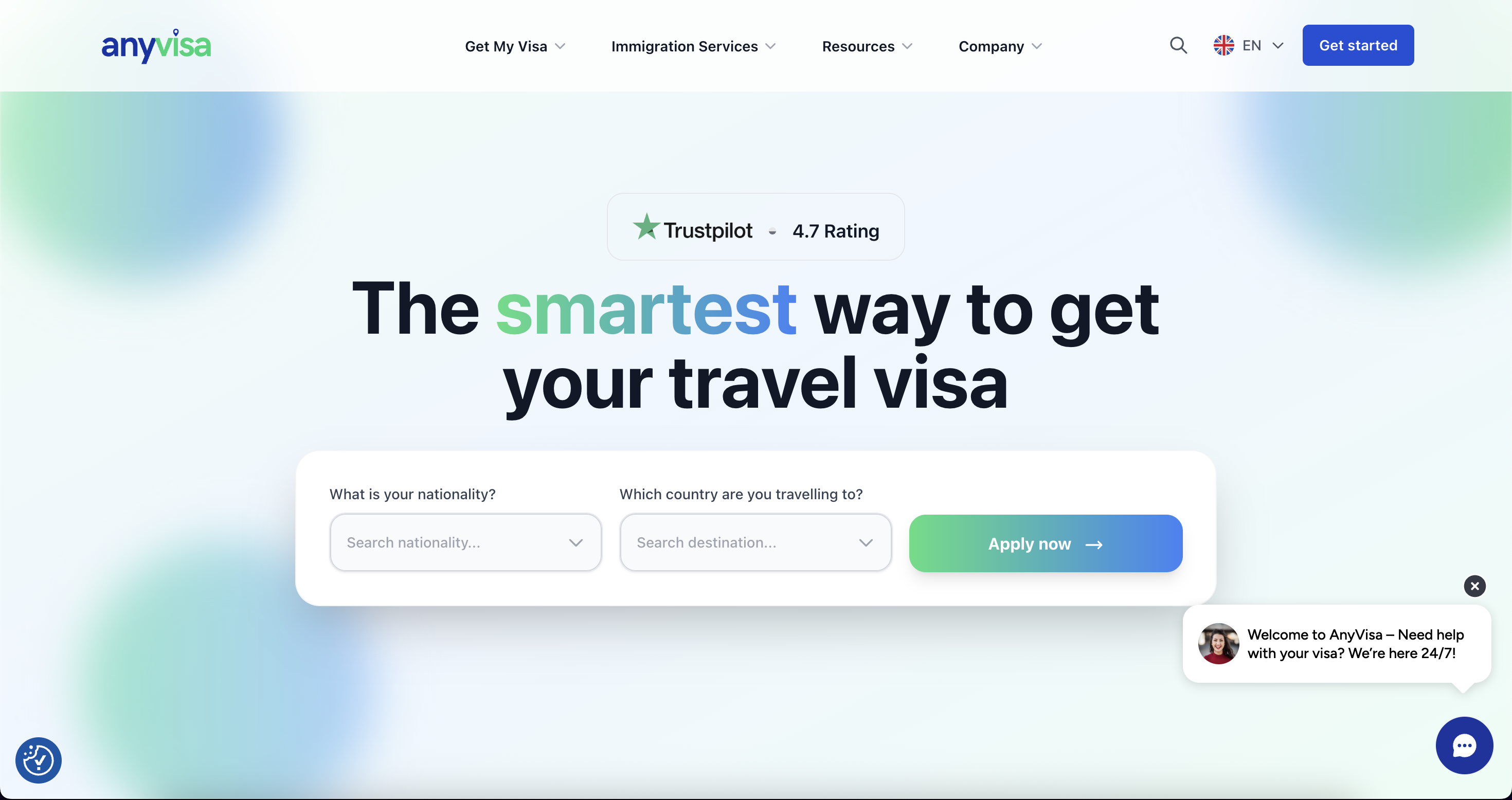
Anyvisa
UK's leading online visa platform
300%
increase in application capacity
75%
reduction in support tickets
4.8/5
customer satisfaction score
 Tomas Hassan · CEO
Tourist visas are the highest-volume work most agencies do. VisaCRM standardises intake across every destination you sell, validates documents before submission, collects fees online, and automates status updates — so one operator can carry far more cases.
Tourist visa processing is the highest-volume work most agencies do: intake, document checks, fee collection and status tracking for leisure travellers, repeated across many destinations that each have their own forms and rules. A purpose-built platform like VisaCRM adapts the intake form to each country, validates documents before submission, collects payment online, and keeps applicants updated automatically — so one operator can carry far more cases.
The traveller picks a destination and VisaCRM loads the matching country intake form, so the right questions are asked from the first message.
Passport, photos, financial proof, itinerary and accommodation are collected on a validated checklist that flags errors before they reach the consulate.
The government fee and your service fee are collected online at intake in the traveller's currency, with an automatic invoice.
The operator reviews the completed file and submits it through the relevant embassy, visa centre or online portal, updating the case status.
The case sits in a status pipeline the whole team can see, with automated updates sent to the applicant at each change.
On approval the traveller is notified and the visa or passport is delivered, closing the case in the analytics dashboard.
Every destination has its own form, rules and document quirks, so the knowledge lives in operators' heads.
VisaCRM encodes each destination as its own intake workflow, so the process stays consistent no matter who handles the case.
At high volume, small document errors turn into rejections, refunds and unhappy travellers.
Validation on upload catches missing or incorrect documents before a file is ever submitted.
Manually re-keying passport data and chasing status updates eats most of an operator's day.
Structured intake and automated status notifications remove the bulk of the repetitive work.
Collecting government fees plus service fees across currencies, with occasional refunds, is fiddly to do by hand.
Online checkout handles multi-currency payment, partial refunds and automatic invoicing.
Travel agents want to sell visas but lack the systems to fulfil them reliably.
A B2B partner portal lets sub-agents submit cases and earn commission while you fulfil them centrally.
A tourist visa authorises short leisure travel — sightseeing, visiting family, a holiday — and explicitly rules out work or long stays. The catch for an agency is that "tourist visa" is not one product but dozens: each destination has its own form, fee, appointment process and document quirks, and the rules also shift with the applicant's nationality.
Underneath that variety, the document core is remarkably stable: a passport with enough validity and blank pages, financial proof, a travel itinerary with return travel, accommodation, and evidence the traveller intends to return home. Get that core right, consistently, across every destination, and most refusals disappear.
VisaCRM treats each destination as its own intake workflow, so an operator handling a UK visitor visa and a UAE tourist visa follows the same disciplined process for each, with the right fields and document checklist loaded automatically.
The economics of tourist visas are about throughput. Margins per application are thin, so the agencies that win are the ones where a single operator can process far more files without more mistakes. That only happens when the process is the same every time and the software does the repetitive parts.
VisaCRM standardises intake, validates documents on upload, and sends the applicant automated updates at every status change, so operators spend their time on the cases that need judgement, not on data entry and chasing. This is the shift behind Anyvisa tripling its monthly capacity on the same team.
Tell us what you need and we'll come back with a plan. Nothing to pay until it's delivered.
Get started →For travel agencies, tourist visas are a natural add-on to flights and hotels — but only if fulfilment doesn't create chaos. VisaCRM gives travel agencies a branded booking-style intake and, where useful, a partner portal so sub-agents and tour operators can submit visa cases and earn commission while you handle the processing centrally.
See how visas become a sales channel for travel agencies rather than a support headache.
Most tourist visas require a valid passport with enough remaining validity and blank pages, a recent photo, proof of funds, a travel itinerary with return travel, accommodation confirmation, and often evidence of ties to your home country. The exact list varies by destination and nationality, so agencies should work from a current per-destination checklist rather than a generic one.
A traditional tourist visa usually means submitting documents and sometimes attending an appointment or interview, with a consular decision. An ETA or eVisa is an online pre-travel authorisation for eligible nationalities, often decided in minutes and linked digitally to the passport. Some destinations offer both, depending on the traveller's nationality and purpose.
Standardise a workflow per destination, validate documents on upload to prevent rejections, collect fees online, and automate applicant updates so no one is messaging clients by hand. A purpose-built platform like VisaCRM does this on the agency's own branded site, letting one operator carry far more cases and freeing partners to sell while you fulfil.
Most tourist visa rejections come from avoidable document problems — expired passports, insufficient funds, missing accommodation, or inconsistent itineraries. Catching these before submission is the single biggest lever. VisaCRM validates each document as it is uploaded against the destination's checklist, so shortfalls are fixed before a file reaches the consulate.
Yes. VisaCRM collects payment at intake in the traveller's currency (GBP, USD, EUR and others), covering both the government fee and your service fee, with automatic invoicing and support for partial refunds and partner commissions. That removes manual invoicing and reconciliation from high-volume tourist processing.
The patterns in this article are already deployed across these platforms. Different brands, different visa types — one engine underneath.
Practical guides that go deeper on running a modern visa business.
Book a discovery call and we'll walk you through the platform with your visa types, payment flow, and the things your current tools leak.
Book a discovery call →